
Sharing Knowledge, Building Safer Communities: Reflections from My Outreach Programmes (June–July 2026)
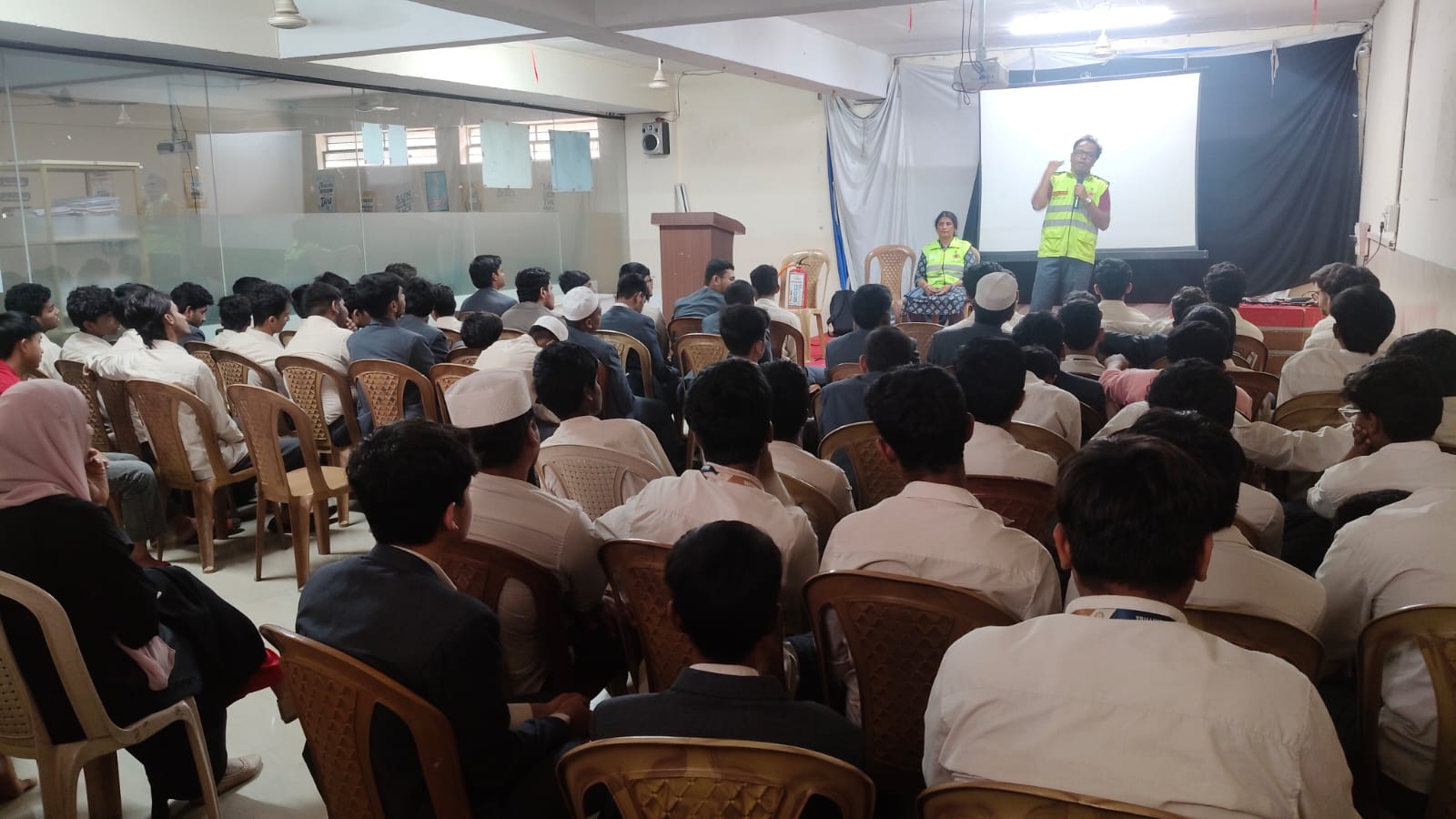
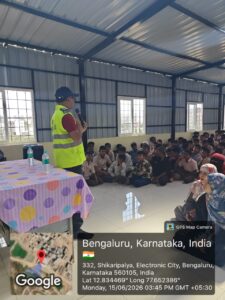
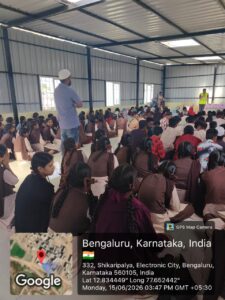
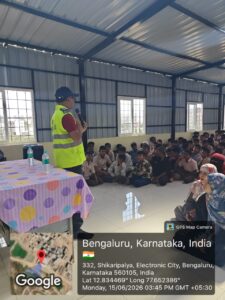
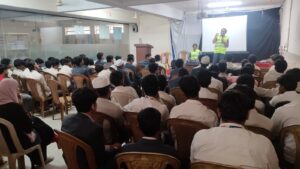
June and July 2026 were particularly fulfilling months in my journey as a trainer and educator. During this period, I had the privilege of conducting a series of outreach programmes for college students across Bengaluru and its surrounding rural areas. These sessions focused on practical life-saving and emergency preparedness topics, including Disaster Management, Basic Life Support (BLS), CPR, First Aid, and Fire Safety.
What made these programmes special was not the number of sessions or the distances travelled, but the opportunity to interact with young minds eager to learn skills that are rarely taught in a structured manner.
The Knowledge Gap
One common observation across almost every institution was the limited awareness students had about responding to emergencies. While many had heard terms such as CPR, disaster management, or fire safety, very few understood the practical steps involved.
Simple questions often revealed this gap:
- What should you do if someone
 suddenly collapses?
- How do you react when a fire breaks out?
- What is the safest way to evacuate a building?
- How can an ordinary citizen help before professional responders arrive?
These are not specialised skills meant only for doctors, firefighters, or disaster response teams. They are life skills that every citizen should possess.
Watching Confidence Replace Uncertainty
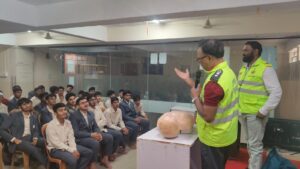
One of the most rewarding aspects of these programmes was witnessing the remarkable transformation that occurred within just a few hours.
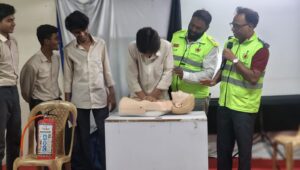
Students who were initially hesitant to answer questions gradually became confident participants. They practised CPR techniques, discussed emergency scenarios, learned to identify hazards, and understood the importance of staying calm during crises.
By the end of each session, the atmosphere had changed completely. Conversations shift
ed from “I don’t know what I would do” to “I think I ca
n help if something like this happens.”
That confidence is perhaps the most valuable outcome of any awareness programme.
Why These Programmes Were Conducted Pro Bono
Every one of these outreach sessions during June and July was conducted pro bono.
People often ask why.
The answer is simple.
Knowledge that has the potential to save lives
should never be restricted only to those who can afford it. Every student, regardless of where they study or their background, deserves an opportunity to learn essential safety and emergency response skills.
If even one trained student is able to save a family member, assist an accident victim, or respon
d correctly during an emergency, the effort has already created a lasting impact.
Learning Beyond the Classroom
Technical knowledge is important, b
- ut emergency preparedness also develops qualities that extend far beyond the classroom.
Students learn to:
- Stay calm under pressure.
- Think critically in difficult situations.
- Work effectively as a team.
- Take responsibility for the safety of others.
- Develop confidence in their own abilities.
These are qualities that benefit them not only during emergencies but throughout their personal and professional lives.
A Journey That Continues
Over the years, I have had the privilege of training thousands of participants from diverse backgrounds, including students, teachers, corporate employees, volunteers, healthcare professionals, government agencies, and community groups.
Yet every new programme reminds me that there is still much work to be done.
India needs more aware citizens, more trained bystanders, and communities that are prepared rather than merely reactive.
Awareness is the first step towards resilience.
A Simple Belief
One belief has guided me throughout my training journey:
Knowledge becomes truly valuable only when it is shared.
Whether it is first aid, fire safety, disaster preparedness, or any other skill, we should never hesitate to pass it on. Every person we train has the potential to become another trainer, another responder, or perhaps the one individual who makes the right decision at the right moment and saves a life.
As long as there are communities that can benefit from these programmes, I hope to continue travelling, teaching, learning, and contributing in whatever way I can.
Because building a safer society does not begin with sophisticated equipment or large institutions.
It begins with one informed person, one trained student, and one shared piece of knowledge at a time.